
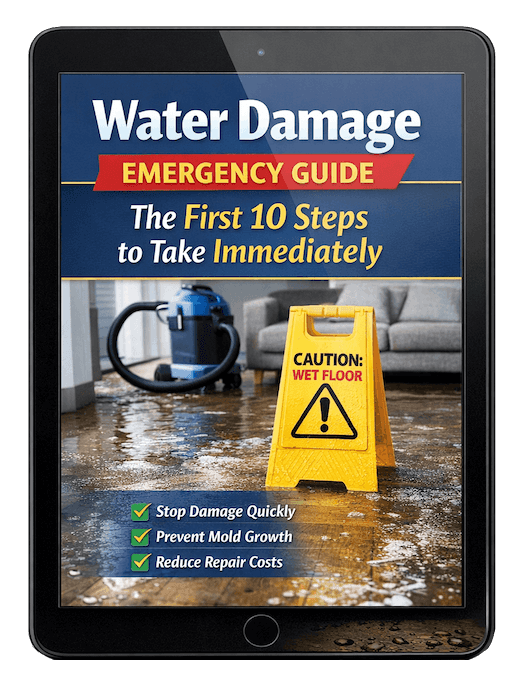
Water Damage Emergency Guide: The First 10 Steps to Take Immediately
Discovering water damage in your home can be overwhelming. The actions you take in the first 24 to 48 hours can make the difference between a manageable cleanup and costly long-term damage.
This free emergency guide outlines the first 10 practical steps you should take immediately to protect your home, your belongings, and your peace of mind.
1. Make Sure Everyone Is Safe
Safety comes first. Avoid standing water if electricity may be present, and keep children and pets away from affected areas.
Do not enter rooms where ceilings are sagging, as structural materials may be compromised.
If you suspect any electrical risk, do not step into the water. Wait until the area can be safely assessed.
2. Stop the Water Source (If Possible)
If it’s safe to do so, stop the source of the water as quickly as possible.
Turn off the main water valve in the case of burst pipes, shut off the appliance valve for issues involving washing machines, dishwashers, or water heaters, and use buckets or towels to contain smaller leaks.
Stopping the flow early helps prevent further spread and minimizes additional damage to your home.
3. Turn Off Electricity in Affected Areas
If water is near outlets, appliances, or electrical wiring, turn off the breakers to the affected areas as soon as it is safe to do so. Never touch electrical devices while standing in water, as this can create a serious shock hazard.
If you are unsure whether it is safe to access the breaker panel or affected area, leave everything as it is and prioritize your safety above all else.
4. Remove Excess Water
For minor water accumulation, begin removing excess water as quickly as possible. Use towels or mops to absorb surface moisture, scoop water into buckets, or use a wet/dry vacuum if conditions are safe.
If there is a larger volume of standing water, a submersible pump may be necessary to remove it efficiently.
The faster standing water is removed, the less it can penetrate flooring, drywall, and structural materials.
5. Move Valuables to a Dry Area
Move valuables to a dry area as soon as possible to prevent further damage.
Relocate electronics, important paperwork, photos, keepsakes, rugs, and lightweight furniture away from the affected space. The sooner these items are moved out of harm’s way, the better the chance they can be dried, restored, and saved.
6. Elevate Furniture
Elevate furniture to help minimize additional damage to both the furniture and your flooring.
Place aluminum foil, wood blocks, or plastic under furniture legs to prevent staining, reduce moisture absorption, and protect finished surfaces. If possible, move furniture completely out of the wet area to limit prolonged exposure to moisture.
7. Increase Air Circulation
Increase air circulation to help moisture evaporate more quickly and reduce the risk of mold growth.
Open windows if weather conditions allow, run fans to promote airflow, and use dehumidifiers to pull excess moisture from the air.
Proper air movement helps dry affected areas more efficiently, slows mold development, and reduces how deeply water can saturate walls, flooring, and structural materials.
8. Remove Wet Rugs and Carpets
Remove wet rugs and carpets carefully, as they can trap significant amounts of moisture beneath the surface. Area rugs should be taken out of the affected space as soon as possible and hung to dry in a well-ventilated area. If wall-to-wall carpeting is wet, pull back the edges if you can safely do so to allow airflow underneath.
Keep in mind that carpet padding absorbs and retains water much more than the carpet itself. In many cases, saturated padding must be removed and replaced to prevent mold growth. Carpets should only be removed entirely if they are not salvageable or have been contaminated by unsanitary water. Acting quickly improves the chances of saving both the carpet and the flooring beneath it.
9. Check for Hidden Moisture
Check carefully for hidden moisture, as water often spreads farther than it first appears.
Even if surfaces seem dry, moisture can remain trapped behind walls and beneath flooring. Watch for signs such as swelling baseboards, bubbling or peeling paint, soft or crumbling drywall, and warped or buckling floors.
These are indicators that water has penetrated deeper into building materials.
Left unaddressed, hidden moisture can lead to mold growth within 24–48 hours and cause more extensive structural damage over time.
10. Act Within the First 24–48 Hours
Act within the first 24 to 48 hours, as time is critical when dealing with water damage.
The longer materials remain wet, the greater the risk of structural deterioration, mold growth, and increasingly extensive repairs. What may begin as a minor issue can quickly escalate if moisture is allowed to linger.
Water doesn’t simply sit on the surface… it seeps into walls, subfloors, insulation, and structural components, often beyond what is immediately visible.
Taking prompt action can:
- Reduce permanent structural damage
- Lower overall repair and restoration costs
- Prevent mold growth and related health risks
- Protect flooring, walls, and insulation
- Preserve personal belongings and valuables
If the damage is extensive or you’re unsure what to do next, professional mitigation can help prevent further damage and ensure your property is properly dried and restored.

Call DMC Restoration Now
If you’re experiencing water damage, don’t wait.
Immediate professional mitigation can prevent further damage, reduce restoration costs, and protect your home or business.
Serving New Jersey, Delaware, and South Eastern Pennsylvania. Available 24/7 for emergency water restoration.